Image Source: Sastri Bakry.
Editor: Leni Marlina
Recognizing a Legendary Figure Who Shaped Literature, Islamic Thought, and Intellectual Discourse in Indonesia and Beyond
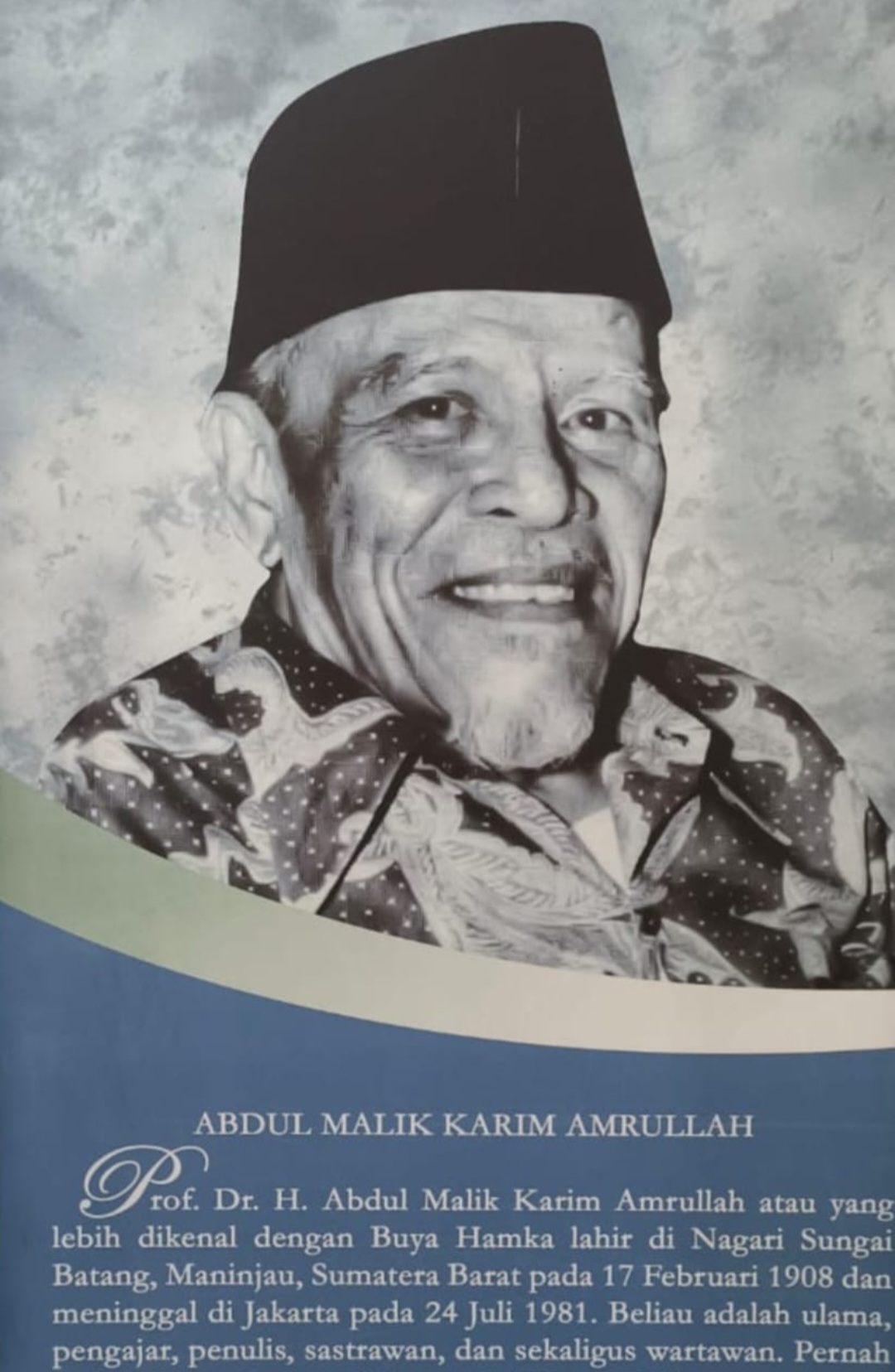
A HISTORIC recognition has been bestowed upon one of Indonesia’s most influential intellectuals. The Regional Executive Board (DPD) of the Indonesian Writers Organization Satu Pena – West Sumatra officially declared Prof. Dr. Haji Abdul Malik Karim Amrullah (HAMKA) as a Great Writer of Nusantara from West Sumatra. The announcement was made during an exclusive event at the West Sumatra Provincial Archives and Library Office in Padang.
Lihat Juga



This decision not only honors HAMKA’s literary and intellectual legacy but also aims to rekindle the relevance of his works, which have significantly shaped the nation’s cultural and philosophical identity. The selection process was rigorous, involving expert discussions, scholarly evaluations, and historical analysis before concluding that HAMKA is the most deserving of this title.
Why HAMKA? A Literary, Religious, and Intellectual Giant
HAMKA was more than just a writer. He was a towering figure whose contributions spanned literature, Islamic scholarship, journalism, and philosophy. Born on February 17, 1908, in Maninjau, West Sumatra, he was raised in an environment rich with intellectual and religious discourse. His father, Haji Abdul Karim Amrullah, was a leading Islamic reformist, shaping HAMKA’s early worldview.
Unlike conventional scholars, HAMKA was largely self-taught, immersing himself in literature, philosophy, history, and Islamic theology. His intellectual pursuits took him to various parts of Indonesia, Mecca, and the Malay world, where he absorbed diverse perspectives, which later influenced his work.
1. HAMKA’s Literary Contributions: Novels That Defined Generations
HAMKA is one of Indonesia’s greatest novelists, whose works continue to be widely read and analyzed. Some of his most renowned novels include:
a. Tenggelamnya Kapal Van der Wijck (The Sinking of the Van der Wijck) – A masterpiece that explores love, social hierarchy, and cultural rigidity, this novel remains a symbol of the eternal struggle between tradition and personal freedom.
b. Di Bawah Lindungan Ka’bah (Under the Protection of the Ka’bah) – A deeply spiritual novel that intertwines faith, fate, and love, set against the backdrop of Islamic devotion.
c. Merantau ke Deli (Wandering to Deli) – A story that reflects the Minangkabau tradition of migration, capturing the essence of struggle and perseverance.
HAMKA’s narrative style was unique, blending realism, moral teachings, and poetic depth. His novels serve as historical and cultural archives, preserving the social dilemmas of his time while remaining profoundly relevant today.
2. HAMKA’s Tafsir Al-Azhar: Bridging Traditional and Modern Islam
Beyond literature, HAMKA was an Islamic scholar of global repute. His Tafsir Al-Azhar, a monumental work of Quranic exegesis, remains one of the most respected interpretations in the Muslim world. What sets it apart is its contextual approach, linking Quranic verses with contemporary social, political, and cultural realities.
His writings emphasized moderate Islam, making him a unifying voice amidst ideological divisions. His ability to balance spiritual depth with intellectual rigor has made Tafsir Al-Azhar a foundational text for many scholars, particularly in Indonesia, Malaysia, Brunei, and beyond.
3. HAMKA’s Impact on Journalism and Politics
HAMKA was also a respected journalist and a pioneer in Islamic media. He founded and edited influential publications such as Panji Masyarakat, which provided a platform for intellectual discourse on Islam, politics, and society.
He briefly ventured into politics, serving as a member of the Indonesian People’s Consultative Assembly (MPR) and later becoming the first Chairman of the Indonesian Ulema Council (MUI). However, his political journey was not without hardship. During President Sukarno’s administration, HAMKA was imprisoned for ideological reasons, yet he never held grudges. Instead, he forgave Sukarno, demonstrating his profound wisdom and spiritual strength—a testament to his character as a great Islamic thinker.
The Rigorous Selection Process for the Title of West Sumatra’s Great Writer
HAMKA’s recognition as West Sumatra’s Great Writer was the result of an extensive selection process conducted by a distinguished panel of experts. Initially, 32 prominent writers from West Sumatra were nominated, then narrowed down to 10 finalists, before a final shortlist of five was evaluated.
After thorough deliberation, HAMKA emerged as the most deserving figure to receive this honor. The selection process was led by:
1. Rahimi Siddik, S.IP, M.Si – Secretary of the West Sumatra Archives and Library Office (Chair of the Plenary Session).
2. Dra. Sastri Yunizarti Bakry, Akt, M.Si, CA, QIA – Chairperson of DPD SATUPENA West Sumatra (Key initiator of the award program).
3. Armaidi Tanjung, S.Sos., M.A – Secretary of DPD SATUPENA West Sumatra (Responsible for candidate selection and verification).
4. Prof. Dr. Ermanto, M.Hum – Dean of the Faculty of Languages and Arts, Universitas Negeri Padang (Academic representative for literary assessment).
5. Dr. Ronidin, M.A – Representative of the Faculty of Cultural Studies, Universitas Andalas (Expert on Minangkabau literature).
6. Isa Kurniawan, S.Si – Coordinator of the Sumatra Media Association (HAMAS) (Oversees the impact of literary publications).
7. Soesilo Abadi Piliang – Representative of the Indonesian Journalists Association (PWI) West Sumatra (Analyzes HAMKA’s journalistic contributions).
8. Fajri Rahmad Ersya, S.STP, M.Si – Head of Library Services, Automation, and Cooperation (Responsible for literary archiving and documentation).
This official recognition was finalized on March 10, 2025, in Padang and signed by Dra. Sastri Yunizarti Bakry and Armaidi Tanjung.
HAMKA’s Global Influence
HAMKA’s intellectual impact extended beyond Indonesia. His works shaped Islamic thought and literature across Southeast Asia, the Middle East, and even Western academia.
1. Influence in the Islamic World
Tafsir Al-Azhar remains a key reference for scholars in Malaysia, Brunei, and the Middle East.
He was recognized as an honorary scholar by Al-Azhar University in Egypt, strengthening Indonesia’s intellectual ties with the Arab world.
2. Southeast Asia’s Literary and Religious Thought
His works have deeply influenced Malay literature and Islamic philosophy.
Universities across Malaysia and Singapore study his texts as part of their curriculum.
3. Recognition in the Western World
HAMKA’s novels have been translated into English and European languages, introducing Indonesia’s rich literary heritage to a global audience.
Western scholars cite him as a pioneer of modern Islamic thought, bridging traditional wisdom with contemporary insights.
Preserving HAMKA’s Legacy for Future Generations
HAMKA’s legacy is not just about the past—it’s about the future. His works continue to inspire scholars, writers, and spiritual seekers. As he famously said:
“If life is merely about survival, then even the animals in the forest do the same. If work is just about making a living, then monkeys work too.”
Through this recognition, Satu Pena West Sumatra ensures that HAMKA’s literary and intellectual contributions remain a guiding light for future generations, shaping a more enlightened and cultured world.
(LM, SATUPENA West Sumatra, Forumsumbar.com | Assisted by AI | Sources: Sastri Bakry)